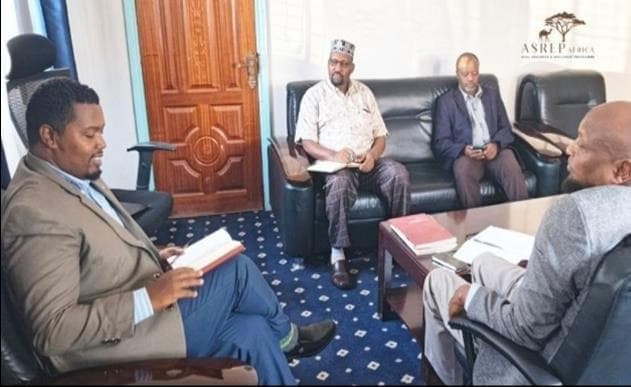
ASAL IK Vault Series Debut: 'Cows, Women & Land' Documents Borana Oromo Knowledge
ASREP releases its debut ASAL Indigenous Knowledge Vault publication — 'Cows, Women & Land' — documenting Borana Oromo ecological and cultural knowledge from Isiolo County. The publication entered policy discourse at county and national level and set a new benchmark for IK documentation in Kenya's ASALs.
In the Borana Oromo culture, three things stand above all else: Cows. Women. Land. This tripartite foundation — livestock as economic life, women as social architecture, land as inherited responsibility — organises Borana society, governance, ecology, and identity. It is a philosophy of interdependence that has enabled pastoralist communities to survive and thrive across one of East Africa's most demanding landscapes for centuries.
It is also knowledge that is disappearing. As older knowledge-holders pass away without documented successors, as formal education systems fail to incorporate indigenous ecological wisdom, and as climate change and land fragmentation disrupt the practices through which IK is transmitted, the Borana Oromo knowledge system faces an accelerating loss. ASREP Africa created the ASAL Indigenous Knowledge Vault to interrupt this process.
What the IK Vault Is
The ASAL Indigenous Knowledge Vault is ASREP Africa's systematic programme for documenting, validating, and making accessible the indigenous ecological, governance, and cultural knowledge held by ASAL communities. The Vault is not an archive in the traditional sense — a repository of documents consulted by researchers. It is designed as a living resource: accessible to communities themselves, relevant to contemporary policy debates, and structured to honour the authority of knowledge-holders.
Get field updates from Kenya's ASALs
Join our community of supporters receiving ASREP's latest news and impact stories.
Subscribe to updates →"We have been told for generations that development means adopting new practices. Nobody asked us what we already know. The IK Vault is us saying — here is what we know, and it matters."
The debut publication, "Cows, Women & Land," focuses on the Borana Oromo community of Isiolo County and documents three interconnected domains of indigenous knowledge: livestock ecology and herd management, women's roles and rights in pastoral governance, and customary land tenure and use practices.
What Is in the Publication
"Cows, Women & Land" draws on a multi-year documentation process involving structured interviews with community elders, focus groups with women's councils, participatory mapping exercises, and ethnographic observation. Key content areas include:
- The Borana ecological calendar — a sophisticated seasonal knowledge system that guides decisions about herd movement, water access, grazing rotation, and livestock health interventions based on environmental indicators that have been accumulated and refined over generations
- Women's governance roles in Borana pastoralism, including the recognised authority of women in decisions about household resource allocation, inter-community negotiation during crises, and the transmission of ecological knowledge to children
- Customary land tenure concepts including the distinction between individual use rights and communal stewardship obligations — a distinction that has important implications for contemporary land policy in Kenya's ASAL counties
- Medicinal and nutritional knowledge associated with specific plant species found in the Isiolo landscape, including use patterns, harvest protocols, and the relationship between biodiversity and pastoral food security
Each section of the publication is presented in both technical and accessible language, with Borana Oromo terminology preserved and explained. The documentation process involved community validation sessions at which knowledge-holders reviewed draft content and corrected, supplemented, or contextualised it.
Policy Implications
"Cows, Women & Land" entered policy discourse at both county and national levels within months of its release. The Isiolo County Government cited the publication in its deliberations on the County Spatial Plan, specifically in relation to customary land use provisions. At the national level, ASREP Africa presented findings from the publication to the National Land Commission in sessions addressing ASAL land policy reform.
The Jameel Observatory — a global research network focused on evidence-based policy for marginalised populations — partnered with ASREP Africa on the policy dissemination dimension of the publication, facilitating introductions to national and international policy networks.
The publication also contributed directly to ASREP Africa's participation in the SDZWA-Kenya (San Diego Zoo Wildlife Alliance Kenya) national biodiversity strategy validation process, where Borana ecological knowledge documented in the Vault was cited as evidence of community-held biodiversity knowledge that national conservation strategy must incorporate.
Why This Matters for ASALs
ASAL communities in Kenya have long been subjects of external research — studied by academics, assessed by development organisations, described in policy documents — without being recognised as producers of knowledge. The ASAL IK Vault inverts this relationship. ASREP Africa is not extracting knowledge from communities and translating it for external audiences. It is documenting knowledge that communities already hold, validating it in partnership with those communities, and amplifying it to the policy audiences where it is most needed.
This matters for practical reasons. The Borana ecological calendar contains climate intelligence accumulated over centuries that is directly relevant to contemporary climate adaptation strategies. The customary land tenure concepts documented in "Cows, Women & Land" offer governance tools that could reduce resource conflict if incorporated into formal land administration. The medicinal plant knowledge documented holds implications for biodiversity conservation planning.
Future volumes in the ASAL IK Vault series will address other ASAL communities and other knowledge domains, building a comprehensive and authoritative body of documented indigenous knowledge that can inform policy and practice across Kenya's arid and semi-arid regions.
Explore ASREP Africa's research and knowledge programme for more on our approach to indigenous knowledge documentation and policy engagement.
Share this story
Related Stories
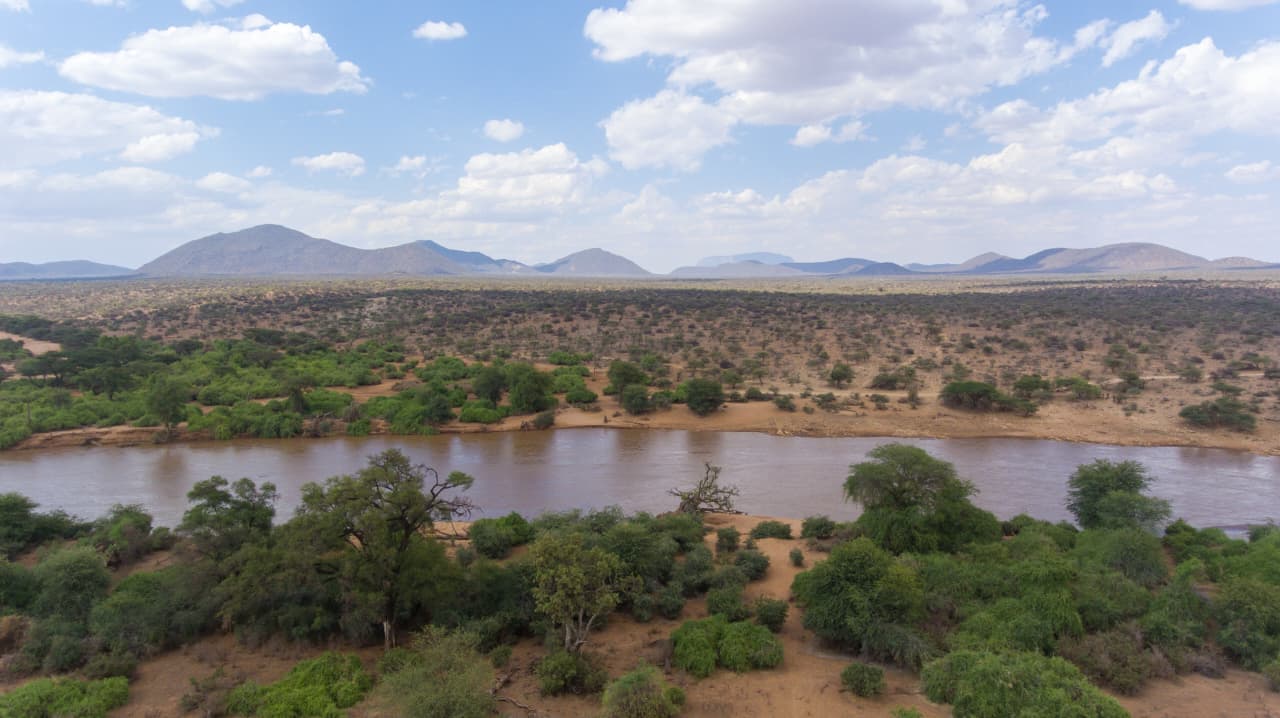
State of the Ewaso Nyiro 2026: ASREP Releases Feature Paper on World Environment Day
On World Environment Day 2026, ASREP Africa released the State of the Ewaso Nyiro 2026 feature paper — an evidence-based assessment of the environmental pressures and climate risks facing more than 3.6 million people across Laikipia, Isiolo, Samburu, Marsabit, Wajir, and Southern Somalia.
Read More