Biographic Magazine: The Future of Conservation Without US Aid
International conservation magazine Biographic profiles ASREP Africa's Waso Eco-Champions model as a blueprint for community-funded ecological restoration that operates independently of international donor dependency.
When Biographic Magazine — the digital publication of the San Diego Zoo Wildlife Alliance that has documented conservation stories from every continent — chose to profile ASREP Africa, the framing of the story was significant. The feature was not about wildlife. It was not about a charismatic species or a dramatic rescue. It was about a model: a new way of organising conservation that puts communities not just at the centre of the work, but at the centre of the decision-making, the ownership, and the financial sustainability.
The Biographic feature, published in early 2026, explored how ASREP Africa's programmes in Isiolo County are demonstrating that conservation effectiveness and community self-determination are not in tension — they are the same thing, properly understood.
The Conservation Model Biographic Documented
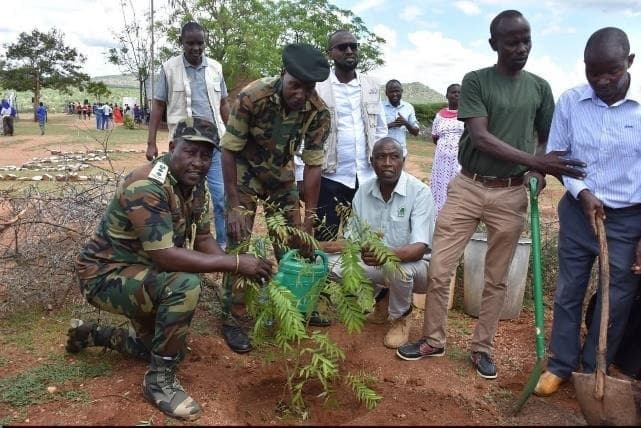
At the heart of the Biographic feature was the Waso Eco-Champions programme: ASREP Africa's initiative that has mobilised 2,000 community members across Isiolo County's 10 wards to plant and steward 10,000 indigenous trees. But the story Biographic told was less about the numbers and more about the mechanism — about why this model works where externally-funded, externally-managed conservation programmes have struggled.
Get field updates from Kenya's ASALs
Join our community of supporters receiving ASREP's latest news and impact stories.
Subscribe to updates →"We are not importing conservation into these communities. Conservation has always been here — in the way people managed their herds, in the knowledge of which trees to protect, in the customary rules about water use. Our job is to support and amplify what communities already know."
Dida E. Fayo, ASREP Africa's Executive Director, articulated for Biographic what makes the organisation's approach distinctive. Having served previously as Director of Programs at the Northern Rangelands Trust and holding a PhD candidacy, Fayo brings both institutional experience and academic rigour to ASREP's model-building. The Biographic interview explored his perspective on the failures of conventional conservation philanthropy and the structural conditions that enable community-led alternatives to succeed.
SDZWA-Kenya Partnership and Biodiversity Strategy
The Biographic feature also documented ASREP Africa's formal partnership with the San Diego Zoo Wildlife Alliance Kenya (SDZWA-K). This partnership operates on multiple levels — shared learning, technical collaboration, and joint participation in Kenya's national biodiversity strategy processes.
ASREP Africa was involved in the validation of Kenya's National Biodiversity Strategy and Action Plan (NBSAP) through the SDZWA-K partnership, contributing community-level biodiversity knowledge — particularly the indigenous ecological knowledge documented in the ASAL IK Vault — to a process that has historically been dominated by scientific and governmental actors.
This participation matters beyond the symbolic. When national biodiversity strategy incorporates community knowledge, it changes what conservation programmes are funded, how land is classified, and which communities are recognised as conservation actors rather than threats to conservation.
Livelihoods and Conservation as One
A consistent theme in the Biographic feature was the integration of conservation and livelihoods in ASREP Africa's model. In conventional conservation, these two imperatives are often treated as competing: communities must be persuaded or compensated to forgo economic activities that damage ecosystems. ASREP's model rejects this framing.
The Waso Eco-Champions programme plants trees that provide browse for livestock, income through gum and resin harvesting, and soil improvement that sustains pastoral livelihoods. The ASAL IK Vault documents ecological knowledge that is inseparable from livelihood knowledge — the Borana ecological calendar guides both conservation and herd management simultaneously. The peacebuilding programme addresses resource conflicts that are both conservation and livelihood crises.
This integration means that community support for conservation is not dependent on financial incentives from external donors. It is driven by the community's own recognition that ecological health and livelihood security are the same interest.
What Global Recognition Means for the Mission
For ASREP Africa, the Biographic and Guardian features represent more than communications achievements. They are assets that serve the organisation's mission in concrete ways.
International recognition opens relationships with global conservation networks including Alliance for Peacebuilding, Interpeace, and the Mercy Corps ecosystem, all of which are ASREP partners. It provides platforms for ASREP's leadership to present at international forums, shaping conservation policy discourse beyond Kenya. It attracts peer researchers and institutions interested in collaborative study of community-led conservation models. And it builds the credibility that enables ASREP Africa to engage as an equal with government institutions, bilateral funders, and international organisations that might otherwise treat a three-year-old Kenyan NGO as a beneficiary rather than a peer.
ASREP Africa's aim is not to become famous — it is to demonstrate, rigorously and at scale, that community-led conservation works. International media coverage is evidence that this demonstration is being observed.
Learn more about ASREP Africa's biodiversity programme and the community-conservation model we are building across Kenya's ASALs.
Share this story
Related Stories

On Nagaa Radio: ASREP and KSG Take Governance 'Under the Tree' to Isiolo Listeners
ASREP and the Kenya School of Government took the Under the Tree governance conversation to the airwaves on Nagaa Radio, reaching Isiolo listeners with civic education framed around the county's youth-unemployment and poverty challenges.
Read More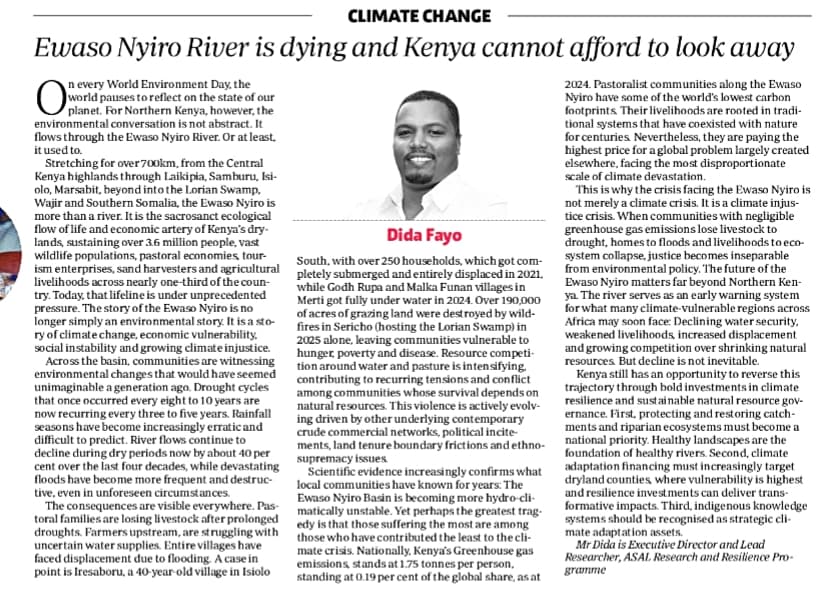
Ewaso Ny'iro River Is Dying: ASREP's Dida Fayo Sounds the Alarm in National Op-Ed
In a widely read op-ed in a Kenyan national daily, ASREP Africa Executive Director Dida Fayo warns that the Ewaso Ny'iro River — a lifeline for 3.6 million people across Kenya's drylands — is dying, and calls for riparian protection, drylands-targeted adaptation finance, and recognition of indigenous knowledge as a climate-adaptation asset.
Read More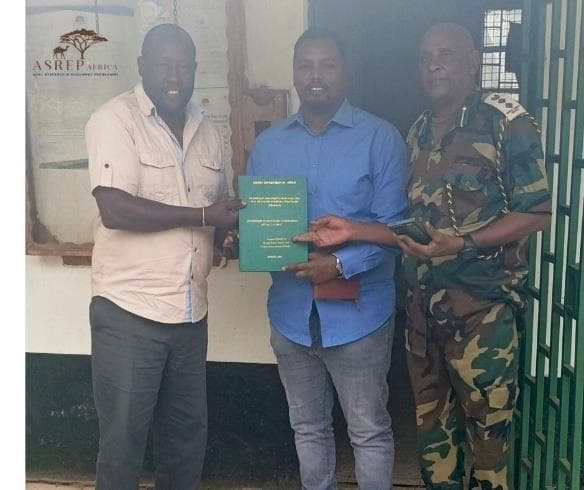
Big News: ASREP Africa Featured in The Guardian & Biographic Magazine — Global Conservation Stories
The Guardian's global environment desk highlights ASREP Africa's community-led conservation model as a template for building locally-funded ecological restoration in an era of declining international aid and USAID funding reductions.
Read More