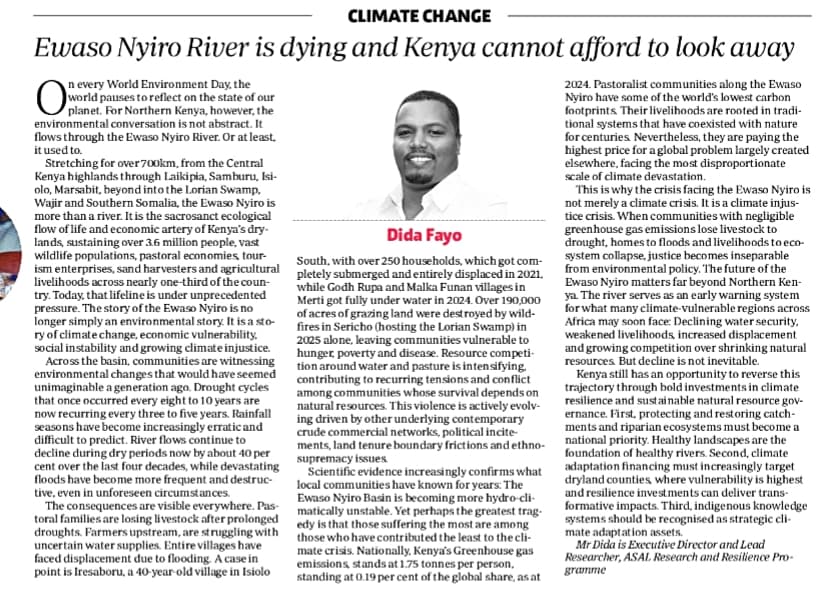
Ewaso Ny'iro River Is Dying: ASREP's Dida Fayo Sounds the Alarm in National Op-Ed
In a widely read op-ed in a Kenyan national daily, ASREP Africa Executive Director Dida Fayo warns that the Ewaso Ny'iro River — a lifeline for 3.6 million people across Kenya's drylands — is dying, and calls for riparian protection, drylands-targeted adaptation finance, and recognition of indigenous knowledge as a climate-adaptation asset.
ASREP Africa Executive Director and Lead Researcher Dida Fayo has published a hard-hitting op-ed in a Kenyan national daily, warning that the Ewaso Ny'iro — one of the country's most important dryland rivers — is dying, and that the nation cannot afford to look away. Titled **"Ewaso Nyiro River is dying and Kenya cannot afford to look away,"** the piece places the slow collapse of a single river at the centre of Kenya's wider climate and food-security debate.
The op-ed is a call to conscience and to policy. It reframes the decline of the Ewaso Ny'iro not as a remote environmental curiosity but as a national emergency unfolding in Kenya's arid and semi-arid lands (ASALs) — the same landscapes where ASREP Africa works every day.
A Lifeline Under Strain
The Ewaso Ny'iro stretches more than 700 kilometres, sustaining an estimated 3.6 million people as it flows from the Aberdare and Mount Kenya highlands down through the rangelands of Isiolo and the wider northern drylands. For pastoralist and agro-pastoralist communities, the river is not scenery — it is drinking water, dry-season pasture, livestock survival, and the thin margin between resilience and displacement.
Get field updates from Kenya's ASALs
Join our community of supporters receiving ASREP's latest news and impact stories.
Subscribe to updates →That lifeline is fraying. The op-ed draws on a stark long-term trend: dry-season flows in the Ewaso Ny'iro have fallen by roughly 40 percent over the past four decades. Upstream abstraction, catchment degradation, riparian encroachment, and a warming, more erratic climate have combined to leave downstream communities facing a river that carries less and less water precisely when they need it most.
When the River Fails, the Land Burns
Fayo's argument is grounded in what communities have already lived through. In 2025, more than 190,000 acres of grazing land burned in Sericho, Isiolo County — a catastrophe that stripped pastoralists of the pasture reserves they depend on to carry livestock through the dry season. The op-ed presents such events not as isolated disasters but as symptoms of a degrading river system and a landscape pushed past its coping capacity.
The message is direct: the health of the Ewaso Ny'iro and the survival of the communities around it are inseparable. Allow the river to die, and the drylands lose the ecological anchor that makes life and livelihoods possible.
Three Calls to Action
The op-ed does not stop at diagnosis. Fayo sets out a clear agenda for what Kenya must do:
- **Protect the riparian corridor.** Safeguard and rehabilitate the river's banks and catchment, curbing encroachment and restoring the vegetation that regulates flow, filters silt, and holds the system together. - **Direct adaptation financing to the drylands.** Ensure that national and international climate-adaptation finance actually reaches the ASALs — the regions most exposed to climate shocks yet chronically underserved by existing funding flows. - **Recognise indigenous knowledge as a climate-adaptation asset.** Treat the accumulated ecological knowledge of pastoralist communities not as folklore but as a practical, evidence-bearing resource for managing water, rangelands, and drought.
Consistent With ASREP's Community-Led Model
The op-ed echoes the conviction at the heart of ASREP Africa's work: that durable solutions in Kenya's drylands must be community-led and knowledge-driven. As a communities-rooted Think-and-Do Tank, ASREP positions Indigenous Knowledge Systems alongside scientific research to shape locally owned responses to the climate crisis — the same approach that underpins its Climate Resilience programme and its wider drylands rehabilitation agenda across Isiolo County.
By carrying that argument onto the pages of a national daily, Fayo brings the reality of the ASALs into a conversation too often dominated by the concerns of Kenya's wetter, higher-potential regions. The Ewaso Ny'iro, the op-ed insists, is a national asset — and its survival is a national responsibility.
"The Ewaso Ny'iro River is dying, and Kenya cannot afford to look away."
Read more about how ASREP Africa is advancing climate resilience and community-led restoration across Kenya's arid and semi-arid lands.
Share this story
Related Stories

On Nagaa Radio: ASREP and KSG Take Governance 'Under the Tree' to Isiolo Listeners
ASREP and the Kenya School of Government took the Under the Tree governance conversation to the airwaves on Nagaa Radio, reaching Isiolo listeners with civic education framed around the county's youth-unemployment and poverty challenges.
Read More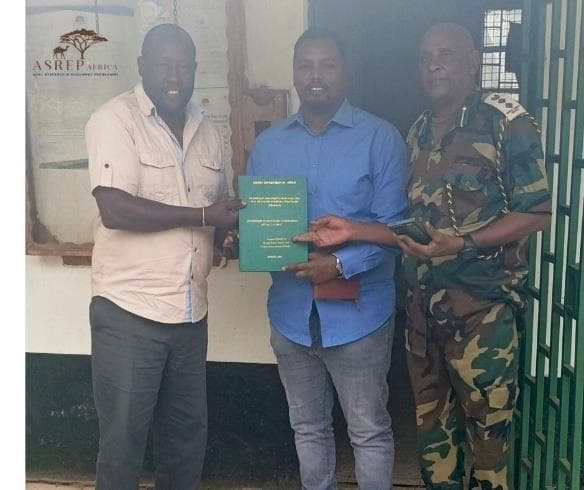
Big News: ASREP Africa Featured in The Guardian & Biographic Magazine — Global Conservation Stories
The Guardian's global environment desk highlights ASREP Africa's community-led conservation model as a template for building locally-funded ecological restoration in an era of declining international aid and USAID funding reductions.
Read More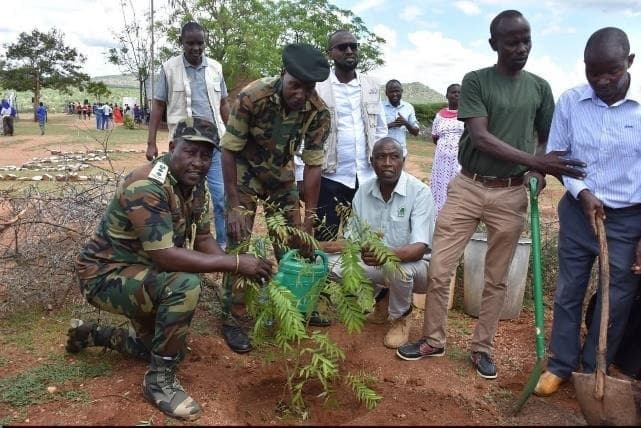
Biographic Magazine: The Future of Conservation Without US Aid
International conservation magazine Biographic profiles ASREP Africa's Waso Eco-Champions model as a blueprint for community-funded ecological restoration that operates independently of international donor dependency.
Read More