A Landmark Partnership for Drylands Climate Resilience and Community-Led Restoration
ASREP Africa and African Agency for Arid Resources Limited (AGAR) have signed a strategic MOU Framework Agreement to jointly advance community-led ecosystem restoration and inclusive green economic transformation across Kenya's drylands, targeting 10,000 plants and 500+ trained eco-champions over the next six months.
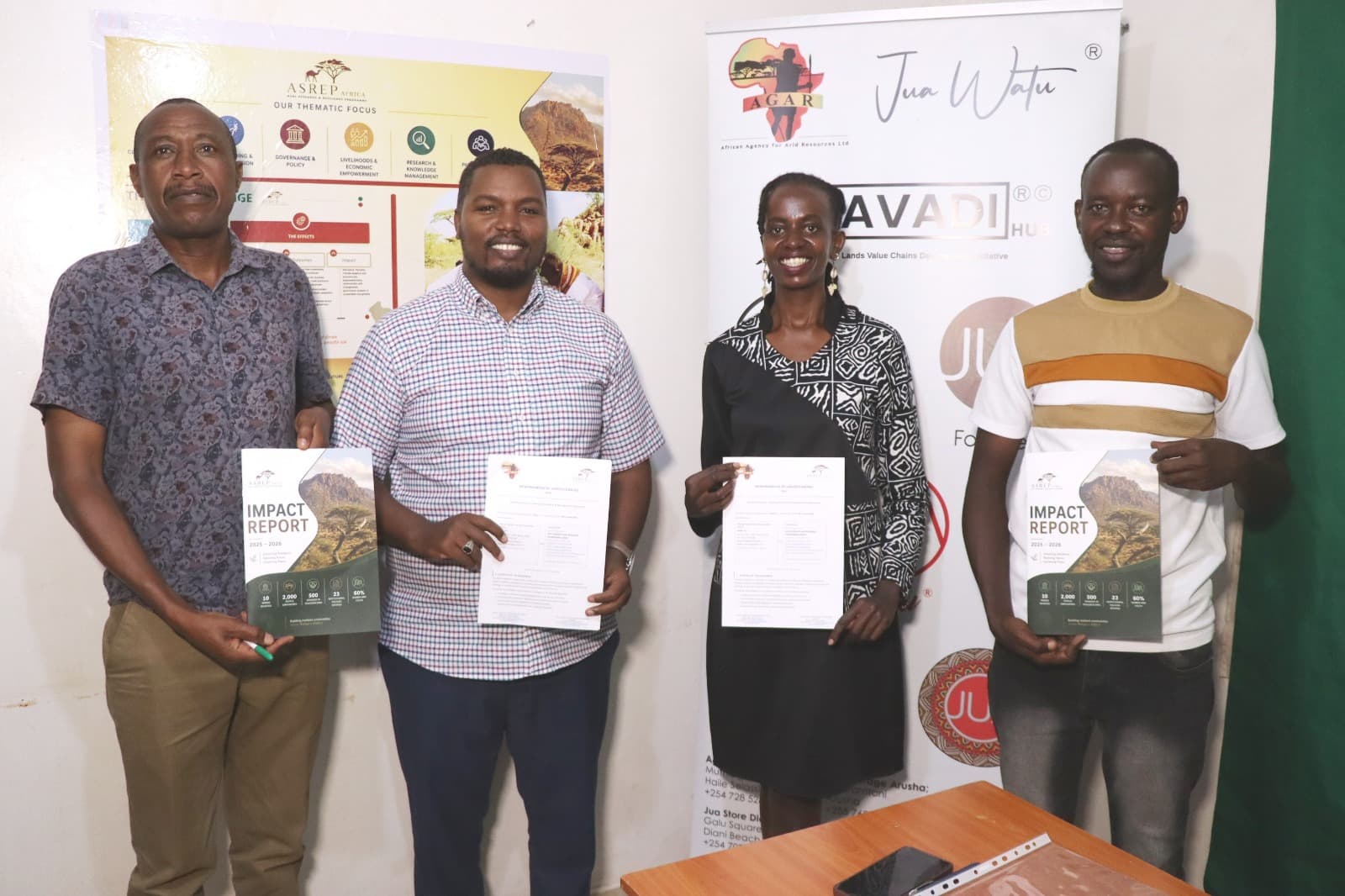
ASREP Africa and African Agency for Arid Resources Limited (AGAR) have formalised a strategic partnership through the signing of an MOU Framework Agreement, committing both organisations to jointly advance evidence-driven climate resilience, ecosystem restoration, and inclusive green economic transformation across Kenya's drylands.
The agreement was signed at ASREP's offices in a ceremony that brought together representatives from both organisations — a milestone that reflects growing convergence among institutions working to place pastoralist communities at the centre of landscape rehabilitation in Kenya's arid and semi-arid lands (ASALs).
A Shared Vision for Community-Led Eco-Enterprise
The partnership is anchored on a shared conviction that sustainable ecological restoration in Kenya's drylands must be driven by the communities who depend on those landscapes. ASREP Africa and AGAR have aligned around a vision of community-led landscape rehabilitation that connects nature-positive approaches to poverty alleviation — grounded in the understanding that ecological health and economic wellbeing in pastoral regions are inseparable.
Get field updates from Kenya's ASALs
Join our community of supporters receiving ASREP's latest news and impact stories.
Subscribe to updates →Central to the partnership is the development of scalable eco-enterprises and value chains that generate direct livelihood returns from restored landscapes. Rather than framing ecosystem restoration as a conservation obligation disconnected from local economies, ASREP and AGAR approach it as a practical economic opportunity for the pastoralist communities who are its primary stewards.
Six-Month Targets: Trees, Aloe, and Eco-Champions
Over the next six months, ASREP and AGAR will jointly mobilise, train, and strengthen the capacity of more than 500 pastoralist youth and women eco-champions across Isiolo County's dryland ecosystems. These eco-champions will lead a large-scale planting initiative targeting 7,000 *Acacia senegal* var. *kerensis* indigenous trees and 3,000 *Aloe secundiflora* plants — species selected for their ecological function and direct role in community livelihoods.
*Acacia senegal* is the primary source of gum arabic, a globally traded commodity with strong market demand, while *Aloe secundiflora* underpins growing value chains in medicinal and cosmetic products. The selection of these species reflects a deliberate strategy: every plant established must serve both ecological restoration and direct economic benefit for the communities that care for it.
Unlocking Gum Arabic and Aloe Value Chains
A defining feature of this partnership is its focus on unlocking the economic potential embedded in drylands ecosystems. Gum arabic — produced by *Acacia senegal* — is a high-value agricultural commodity used in food, pharmaceutical, and industrial applications. Kenya's drylands hold significant gum arabic production potential, but pastoralist communities have historically been excluded from the value chain by limited market access, processing knowledge, and collective production capacity.
ASREP and AGAR will work to close this gap: strengthening rangeland governance, supporting community producer groups, and building the market linkages that allow pastoralist households to capture real value from the trees they plant and tend. Aloe-based value chains present parallel opportunities, with growing international demand for processed aloe products and raw material supply. This initiative also advances sustainable rangeland governance, biodiversity conservation, and climate-adaptive livelihoods across Isiolo's fragile dryland ecosystems.
Building on the Waso Eco-Champions Momentum
The ASREP–AGAR partnership builds directly on the momentum of ASREP Africa's Waso Eco-Champions programme — a flagship initiative jointly advanced with the Kenya Forest Service that has already mobilised over 2,000 community eco-champions and planted 10,000 indigenous trees across all 10 wards of Isiolo County.
ASREP's wider drylands rehabilitation agenda sets ambitious long-term targets: planting 200,000 indigenous trees, empowering 2,000 youth and women eco-champions, and restoring 1,500 hectares of degraded landscapes. The AGAR partnership advances this agenda by adding institutional capacity, technical expertise, and complementary networks that can accelerate delivery across the Climate Resilience programme — deepening the community-led model that has proven effective in Isiolo's challenging ecological context.
Indigenous Knowledge Systems and KEFRI Collaboration
As a communities-rooted Think-and-Do Tank, ASREP Africa is committed to positioning Indigenous Knowledge Systems (IKS) alongside scientific innovation to shape locally owned solutions for Africa's drylands resilience agenda. The AGAR partnership will advance this commitment by bridging traditional ecological wisdom with research-based approaches and market-driven conservation models.
Through prospective collaboration with the Kenya Forestry Research Institute (KEFRI), the partnership will develop evidence-based approaches that draw on the accumulated ecological knowledge of pastoralist communities and the methodological rigour of formal research. This work will sit within a wider network of institutional support that includes CIFOR (Center for International Forestry Research), SEI (Stockholm Environment Institute), the Jameel Observatory for Food Security Early Action, Global Landscapes Forum (GLF), and Denmark in Kenya.
Acknowledgements
ASREP Africa extends sincere appreciation to AGAR Managing Director Tommaso Iser Menini, Wanjiru Mburu, and the entire AGAR team for their trust, partnership, and shared commitment to building a more resilient drylands future. The partnership is supported by Wyss Academy for Nature, whose vision and investment have been central to its development. ASREP also recognises the contributions of Prof. Nura Mohamed, Jennifer Maurer, Dida Fayo, and the wider network of stakeholders — including CIFOR, SEI, the Jameel Observatory for Food Security Early Action, GLF, and Denmark in Kenya — whose ongoing engagement strengthens drylands resilience efforts across the region.
"Together, we are transforming drylands from landscapes of vulnerability into landscapes of opportunity."
Share this story
Related Stories
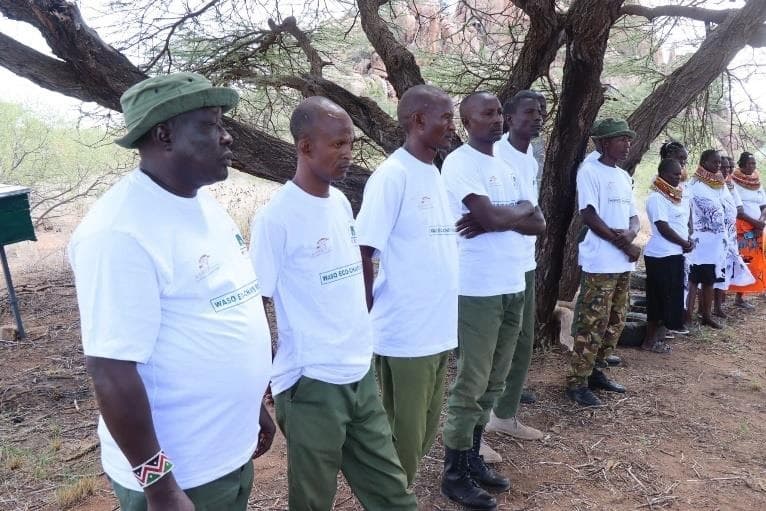
One Earth Partners Spotlights ASREP Africa as Ready to Scale
One Earth Partners has spotlighted ASREP Africa as a homegrown Kenyan nonprofit 'already moving boldly' and ready to scale — pointing to its Kenya Forest Service partnership, global media features, and the long-term livelihood potential of its Acacia senegal restoration.
Read More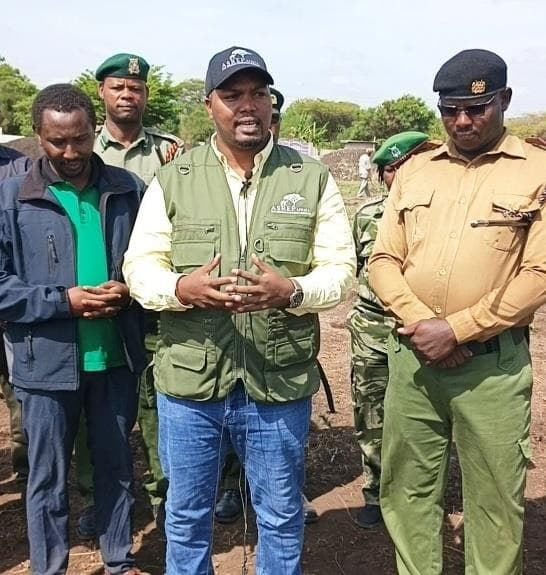
ASREP and FAO Strengthen Digital Land Governance in Isiolo
With 78% of Isiolo County's rangelands reported as degraded, an FAO-supported cross-learning exchange brought stakeholders together for hands-on training in QGIS, spatial data management, and geospatial analysis to strengthen digital land governance.
Read More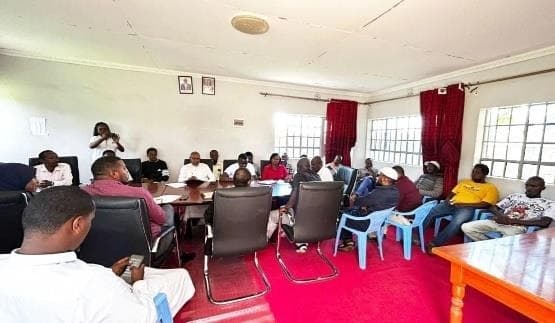
ASREP Co-Leads 'Whole-of-Society' Governance Planning in Isiolo
ASREP joined more than 40 agencies to plan a 'Whole-of-Society' approach to governance and citizen engagement in Isiolo — anchored by a four-day Under the Tree Series pilot in Wabera Ward this August.
Read More